
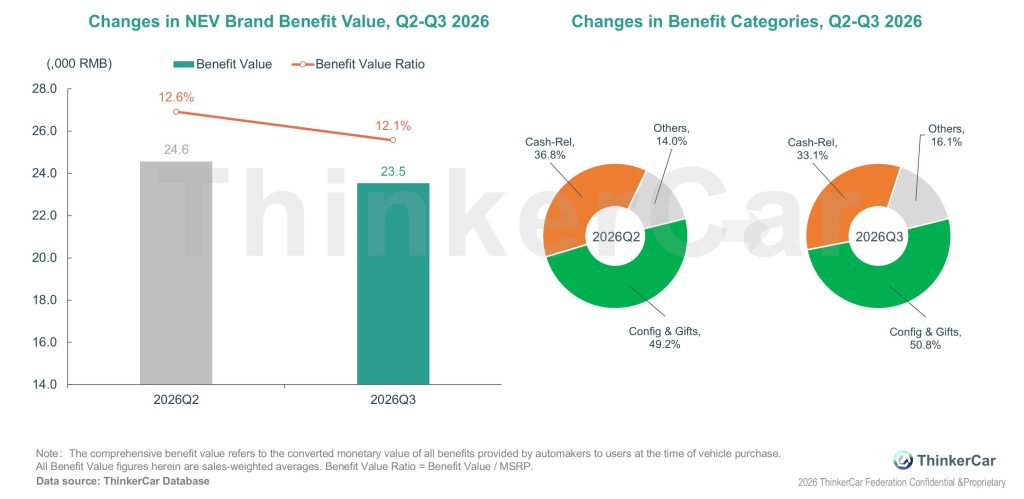
Driven by intensive new NEV launches in Q3, the per-vehicle benefit value dropped from 24.6K RMB to 23.5K RMB, with the benefit value ratio down 0.5pp. The benefit structure shifted: cash-related benefits shrank, while configuration & gifts took the dominant share at 50.8%. The share of other benefits also rose, as brands cut direct cash discounts in favor of configurations and gifts.
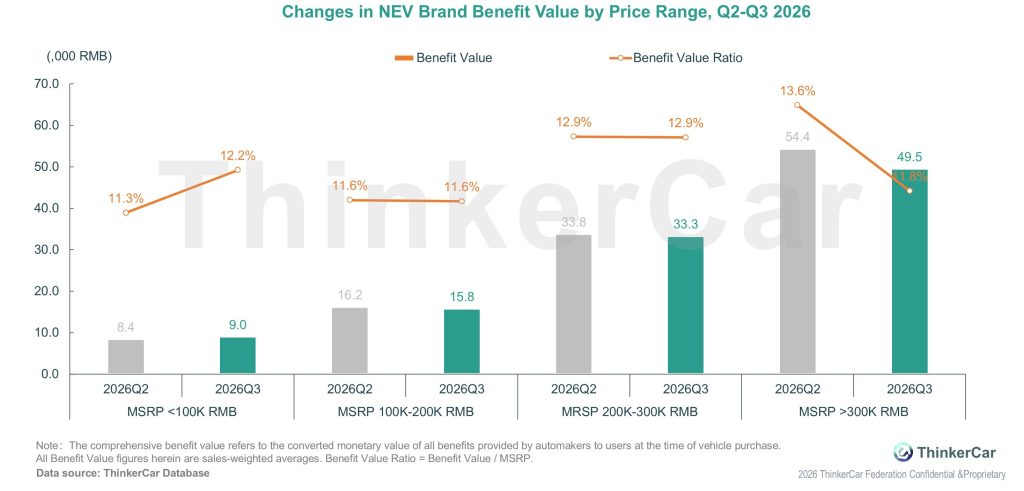
By price range, benefit performance varies across segments. The per-vehicle benefit value edged up for models under 100K RMB MSRP. The 100K-200K and 200K-300K RMB price ranges posted modest declines. The above-300K RMB premium price range saw a notable pullback: its benefit value dropped from 54.4K RMB to 49.5K RMB, and benefit value ratio fell from 13.6% to 11.8%, which was the key driver of the overall decline.
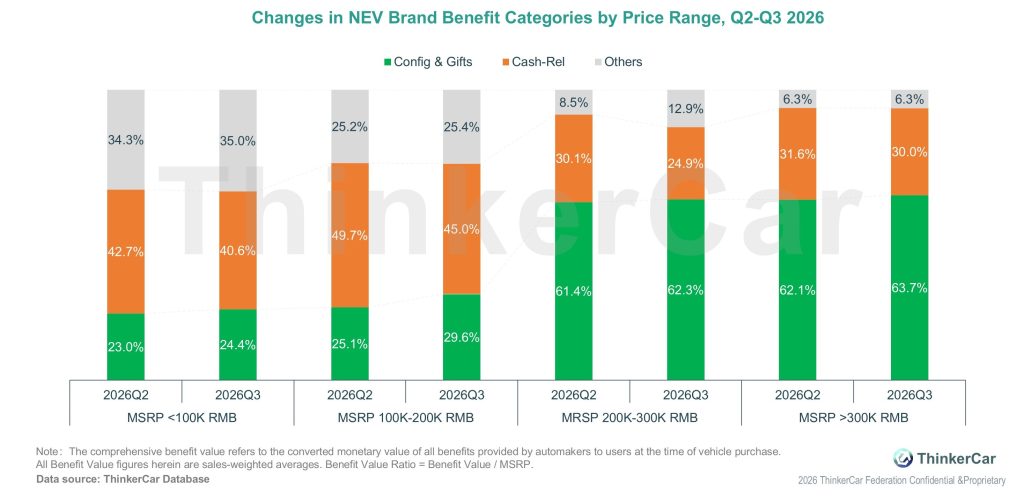
By price range, benefit structures moved in the same direction: cash-related benefits generally fell while configuration & gifts gained share. The 100K-200K RMB range recorded the largest drop in cash benefits. Configuration & gifts stayed high in the 200K-300K and above-300K RMB ranges. Changes were mild for models under 100K RMB, as all segments shifted from cash discounts to configuration and gift benefits
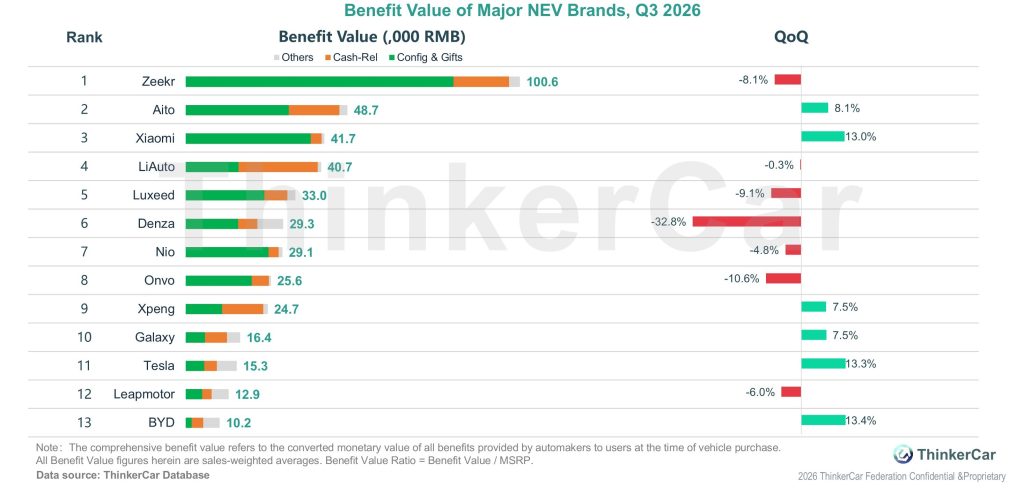
In Q3 2026, per-vehicle benefit value diverged markedly among major NEV brands. Zeekr ranked first with an 8.1% QoQ decline. AITO and Xiaomi took the 2nd and 3rd spots; their benefit value rose on subsidies for existing models. Luxeed, Denza and Nio all saw QoQ drops, with Denza posting a steep fall. Tesla and BYD also registered double-digit QoQ growth, while BYD sat lower in the ranking, with benefit value up 13.4% QoQ.
ThinkerCar Data
chosen by over 200 renowned global enterprises