
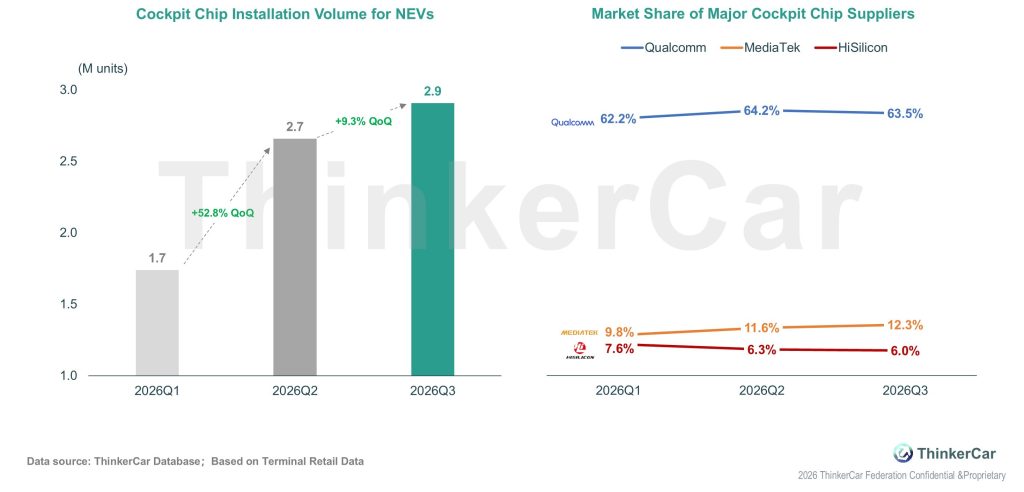
In Q3 2026, the installation volume of cockpit chips for new energy passenger vehicles hit 2.9 million units, representing a quarter-on-quarter increase of 9.3%. The growth rate moderated notably compared with Q2. In terms of competitive landscape, Qualcomm remained the leading cockpit chip supplier. Its market share stood at 63.5% in Q3, a slight dip from 64.2% in Q2, yet its lead stayed solid. MediaTek sustained an upward trend and lifted its share to 12.3%, whereas HiSilicon saw its share decline further to 6.0%.
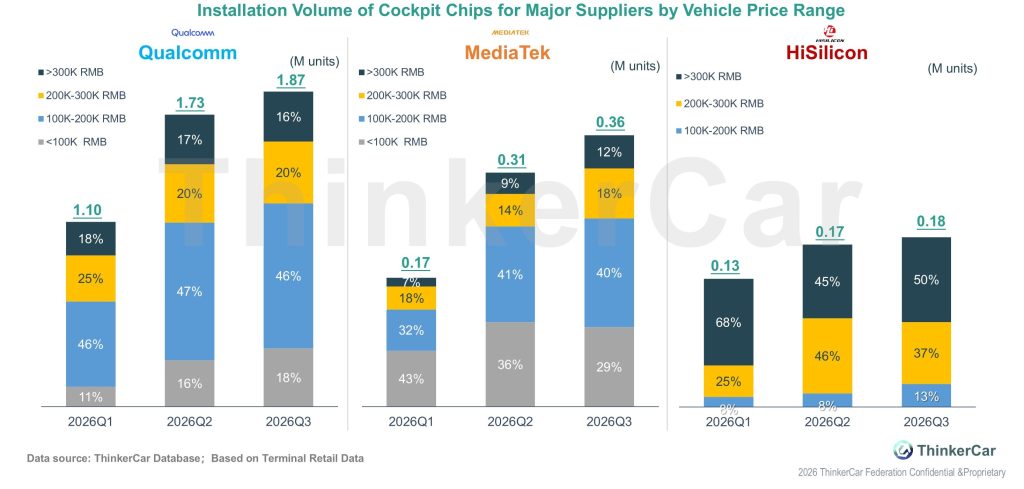
In Q3 2026, Qualcomm’s cockpit chip installation volume hit 1.87 million units. The 100K–200K RMB segment remained its largest at 46% (down marginally from 47% in Q2), while the share of models above 300K RMB edged down to 16%. MediaTek reached 0.36 million units; the 100K–200K RMB bracket stayed its top segment at 40% QoQ flat, yet the share of vehicles under 100K RMB declined to 29%. HiSilicon posted 0.18 million units, with chips largely focused on models above 300K RMB. This high-end segment rose to 50% of its total installations, from 45% in Q2
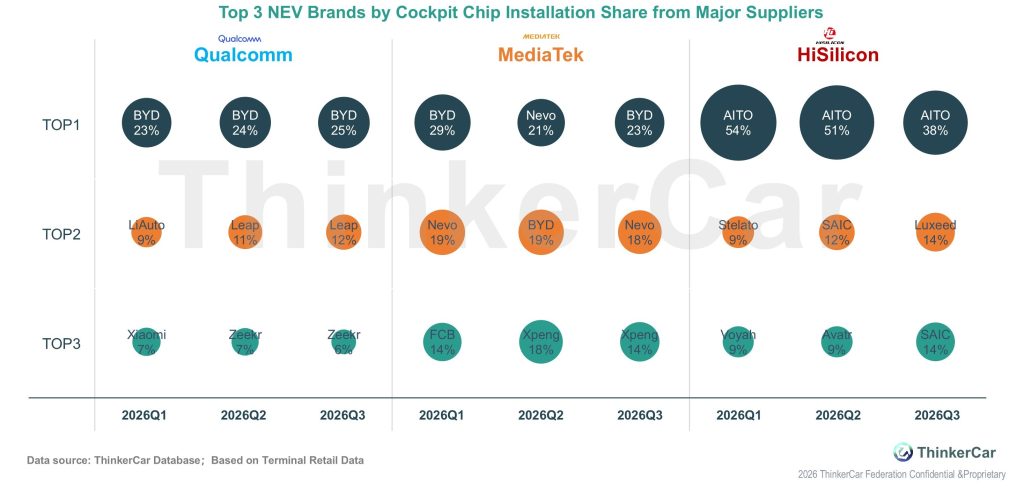
In Q3 2026, BYD continued to lead Qualcomm’s NEV brand portfolio, with its installation share climbing to 2% versus 24% in Q2, and Leapmotor’s share also ticked up to 12%. Within MediaTek’s customer structure, BYD’s share improved to 23% from 19% last quarter; Nevo retreated to 18% from 21%, and Xpeng fell to 14% after 18% in Q2. HiSilicon remained heavily reliant on AITO, though AITO’s share fell notably to 38% from 51% in Q2. Luxeed and SAIC each captured 14% of HiSilicon’s cockpit chip installations in Q3.
ThinkerCar Data
chosen by over 200 renowned global enterprises